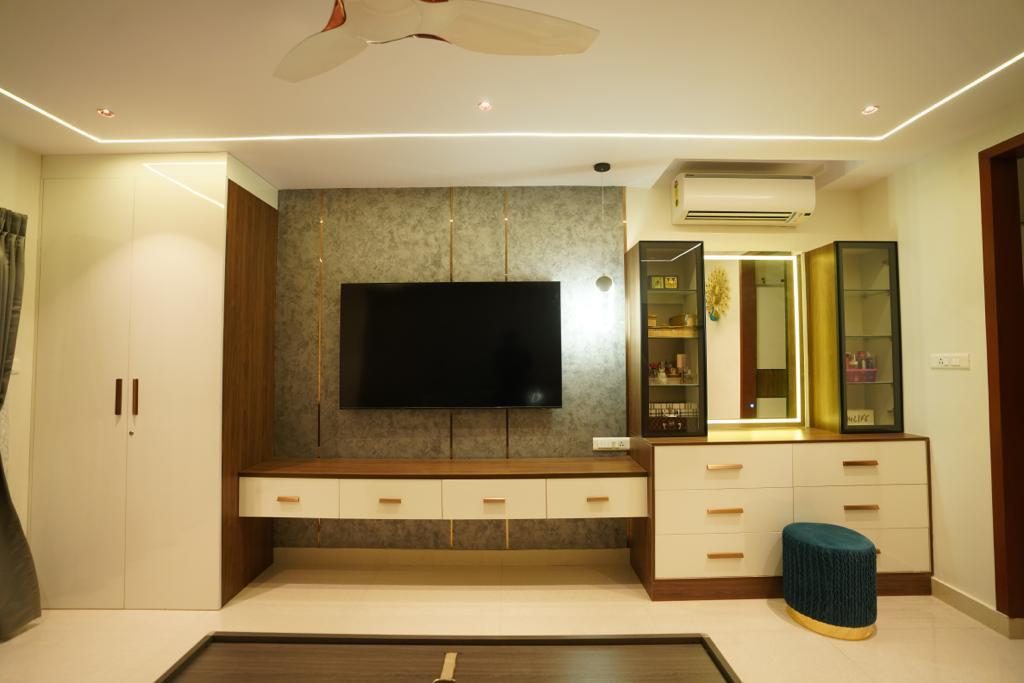
Most interior contracting firms in South India struggle to scale past a handful of cities without quality slipping. AlcorOne Solutions says it has now completed more than 80 residential, office, retail, and commercial projects since 2022 while offering turnkey execution across South India — a volume that raises the question of how the firm has managed consistency at that scale.
Itemised Scope as a Control Mechanism
The company’s answer, according to its own process documentation, is structural rather than aspirational: every project is scoped through an itemised bill of quantities that lists materials, finish specifications, and exclusions before work begins. The stated goal is to eliminate the gap between what a client thinks they’ve agreed to and what actually gets billed — a common source of disputes in interior projects run through informal contractor arrangements.
Material procurement, vendor selection, and site supervision are handled in-house rather than outsourced to a network of subcontractors with varying standards, which the company argues is part of how it maintains consistency across a growing number of cities.
Project Mix
The 80-plus completed projects span eight categories: residential interiors, renovation and refurbishment, turnkey execution, BOQ and estimation support, vendor and site coordination, office interiors, retail fit-outs, and commercial interiors covering sectors such as F&B, clinics, education, and hospitality. Notable completed work includes a full villa execution at the Serene Sanctuary project in Hyderabad, a 5,450 sq. ft. office fit-out for KG360 in Chennai, and a retail build-out for a Japanese dessert brand in Hyderabad’s Jubilee Hills.
Timelines and Trade-Offs
A median residential project reportedly runs around 12 weeks, though this varies by scope — a full villa execution with custom joinery and marble work can extend to 16–18 weeks, while a targeted refurbishment may close faster. That variability is typical of the category, and the more relevant question for prospective clients is usually how clearly a contractor communicates exclusions and delays upfront rather than the headline timeline itself.
The Bigger Picture
Eighty projects across a company’s first four years is a modest but credible base for a regional contracting firm, particularly one running across 10 cities rather than concentrating in a single metro. It is not, on its own, evidence of quality — that depends on execution details like finish tolerances and snag-list closure that are harder to verify from a company’s own materials. What it does suggest is a firm that has chosen to standardise its process rather than treat each city or each project as a one-off, which is a meaningfully different bet than most independent interior contractors make.
Reading Project Counts With Some Caution
It’s worth noting that a completed-project count says nothing by itself about client satisfaction, cost overruns, or how disputes were resolved along the way — figures that firms rarely publish regardless of scale. The more useful due-diligence step for a prospective client is usually asking to see reference projects of comparable scope and budget, and speaking directly with past clients about how closely the final handover matched the original BOQ, rather than relying on the headline project count alone.
Discover more from Times Release
Subscribe to get the latest posts sent to your email.