PM Narendra Modi today claimed that the practice of ‘cut money’ has ended in West Bengal, citing the Annapurna Yojana’s direct transfer system as proof.
According to Modi, the scheme’s fourth instalment is being sent directly to the bank accounts of nearly 1.5 crore women beneficiaries across the state.
‘Cut money’ is a term describing the alleged deduction of welfare scheme funds by intermediaries before beneficiaries receive them.
The Direct Benefit Transfer model bypasses intermediaries by sending payments straight to beneficiaries’ bank accounts.
The statement arrives amid continued political debate over welfare administration in West Bengal ahead of state assembly polls.
The direct bank transfer mechanism is being cited by the government as evidence that the practice of ‘cut money’ has ended in West Bengal.
‘Cut money’ refers to the alleged practice of intermediaries deducting a portion of welfare scheme funds before they reach intended beneficiaries.
Direct Benefit Transfer (DBT) schemes route government payments straight into beneficiaries’ bank accounts, reducing the scope for funds to be diverted through intermediaries.
The Annapurna Yojana is aimed at providing financial support to women beneficiaries across West Bengal as part of the state’s welfare programming.
PM Modi’s remarks on the scheme come amid continued political debate over welfare delivery and governance in West Bengal.
The Indian government has expanded DBT infrastructure significantly over the past decade, covering hundreds of welfare schemes across states.
Aadhaar-linked bank accounts have played a central role in enabling direct transfers, reducing leakage compared to earlier cash or voucher-based systems.
West Bengal has multiple state-run welfare schemes targeting women beneficiaries, with Annapurna Yojana forming one component of this broader support system.
The claim regarding the end of ‘cut money’ practices is likely to feature prominently in ongoing political discourse ahead of the state’s assembly elections.
Government officials have periodically highlighted DBT statistics as a marker of administrative efficiency and reduced corruption in welfare delivery.
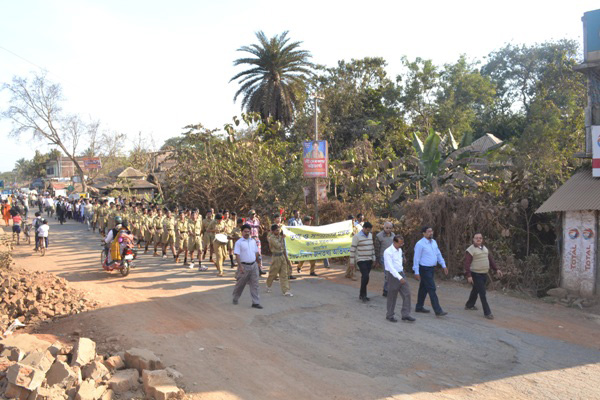
Women at a public information campaign, Paschim Medinipur, West Bengal (representative image), Wikimedia Commons, GODL-India
Discover more from Times Release
Subscribe to get the latest posts sent to your email.