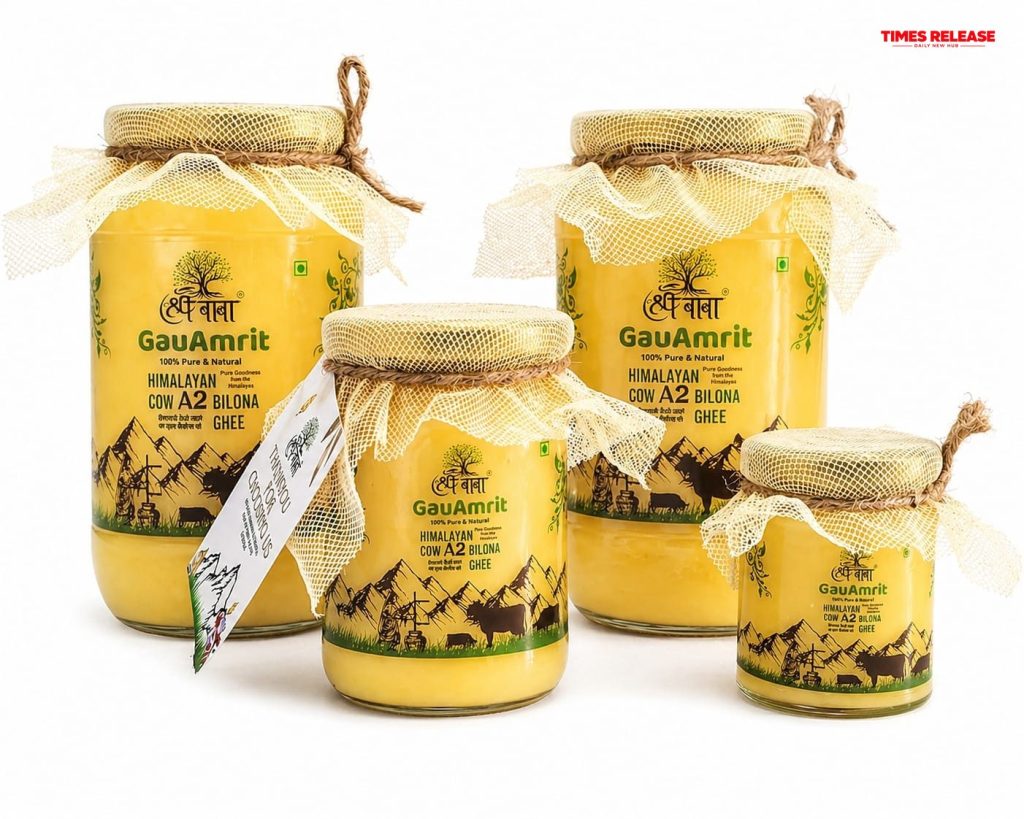
The word "Bilona" describes a centuries-old churning technique, and it sits at the center of how GauAmrit, the flagship ghee brand of Jabalpur-based Shree Baba Food India, explains what differentiates its product from mass-market ghee sold across Indian supermarkets.
In the traditional Bilona process, milk from desi cow breeds is first set into curd, which is then hand- or machine-churned using a wooden bilona (churner) to separate butter, rather than separating cream directly from milk as most industrial dairies do. The butter is then slow-cooked over low heat to produce ghee. Artisanal producers and Ayurvedic practitioners have long argued this method yields a more aromatic, nutrient-dense product than centrifugal cream-separation used in large-scale ghee manufacturing, though the claim is based primarily on traditional practice and anecdotal culinary preference rather than a substantial body of peer-reviewed comparative nutritional research.
A Slower, Costlier Process
Because Bilona-method ghee requires curding, hand-churning and slow-cooking rather than mechanized separation, it is inherently lower-yield and more labor-intensive than industrial production — a cost structure that typically translates into a higher retail price, positioning products like GauAmrit's within the premium segment of India's ghee market rather than competing directly with mass-market brands on price.
Shree Baba Food India, which also operates under the names Shri Sidhha Baba Food & Agro Company and Shri Sidhha Baba Industries, has not published independent verification of its Bilona-method claims, such as third-party process audits, though the company describes purity and quality as central to its production philosophy. "At Shree Baba, our aim is to bring authentic, natural and traditionally crafted food products to modern consumers while maintaining the values of purity, quality and trust," founder Omm said.
Why the Process Claim Matters to Buyers
Consumer-research on India's premium ghee segment suggests that process transparency — how a product is made, not just what it contains — has become an increasingly important purchase driver, particularly among urban consumers seeking a connection to traditional food practices. This has made "Bilona method" itself a marketing term used across multiple competing desi ghee brands, not exclusive to GauAmrit, making differentiation between brands' actual production practices difficult for consumers to verify independently.
A Desi Cow, Himalayan Sourcing Story
GauAmrit ties its Bilona-method claim to Himalayan desi cow sourcing specifically, a combination the company says reflects the historical origins of the Bilona tradition itself. The company has not disclosed which desi cow breeds specifically supply its milk or provided details of its supplier network.
Frequently Asked Questions
What is the Bilona method used by GauAmrit?
It is a traditional technique where milk is set into curd, hand-churned to separate butter, and then slow-cooked into ghee, rather than using industrial cream separation.
Is Bilona-method ghee scientifically proven to be more nutritious?
Rigorous, independent comparative studies on nutrient differences between Bilona-method and industrially produced ghee remain limited; the claim rests primarily on traditional practice rather than a substantial body of peer-reviewed research.
Discover more from Times Release
Subscribe to get the latest posts sent to your email.