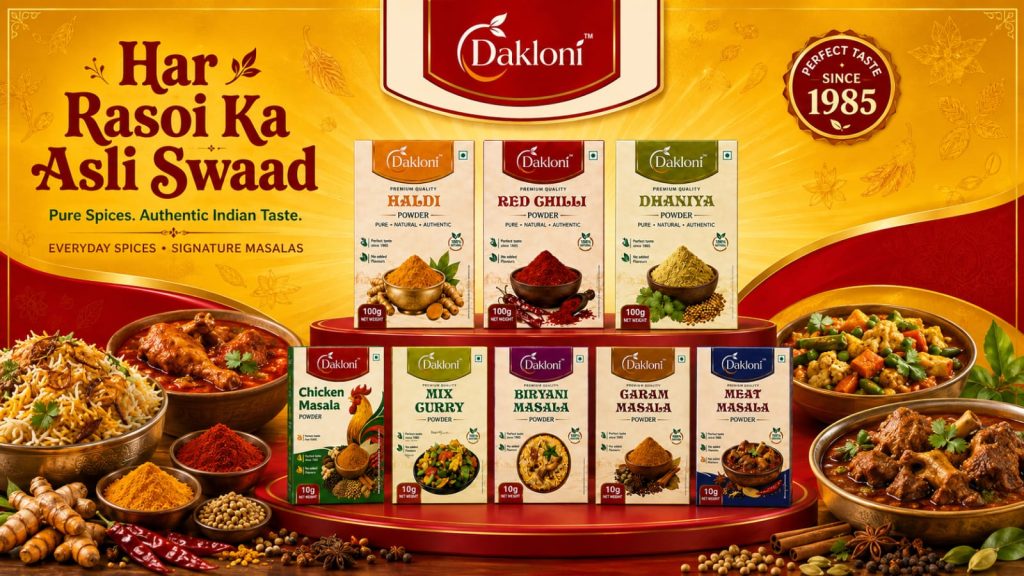
Long before packaged spice blends became a shelf staple in Indian homes, families in Odisha were grinding, sun-drying and hand-mixing their masalas in small batches, guided by recipes passed down through generations. That is the world Dakloni Masala grew out of. Founded in 1983, the brand has spent more than four decades supplying households across Odisha and, more recently, the rest of India with spice blends rooted in regional tradition. Today, under its parent company Green Chocy Pvt Ltd, Dakloni Masala is positioning itself as one of India’s emerging direct-to-consumer (D2C) spice brands, selling straight from its own website to kitchens nationwide.
Odisha Roots, National Ambitions
Odisha’s cuisine leans on subtle, layered spicing rather than sharp heat, and Dakloni Masala’s blends reflect that heritage. The brand describes its process as staying close to how spices were traditionally prepared in the region — cleaned, dried and ground in a way that preserves natural aroma rather than masking it with fillers. As the company has grown, it has carried that regional identity forward while widening its distribution to reach kitchens well beyond Odisha’s borders, part of a broader trend of regional Indian food brands going national through online channels.
What’s Inside the Dakloni Masala Range
The current product line-up covers the essentials that anchor most Indian meals, alongside a curated dry fruits selection:
- Turmeric Powder — used daily across Indian cooking for its colour, earthy flavour and long-standing place in home remedies.
- Red Chilli Powder and Kashmiri Red Chilli Powder — the former for everyday heat, the latter prized for its deep colour with a comparatively milder bite.
- Garam Masala — a blended spice mix used to finish curries, dals and vegetable preparations with warmth and depth.
- Garlic Powder and Onion Powder — pantry staples that add quick flavour to marinades, gravies and snacks without the prep time of fresh produce.
- Dry Fruits — including cashews, almonds, walnuts, pistachios and raisins, sold as part of the brand’s broader pantry offering.
Quality Claims: What Dakloni Masala Says About Its Standards
Dakloni Masala markets its spices as organic and free from artificial additives, positioning purity as its central promise to customers. The brand states that its sourcing, cleaning and packaging processes follow strict hygiene protocols, from selecting raw spices to sealing the final packet, so that what reaches a customer’s kitchen is as close as possible to what left the processing unit. For a category where adulteration and inconsistent quality have long been consumer concerns in India, this emphasis on traceable, hygienic processing is central to how the brand differentiates itself in a crowded spice market.
Why Dry Fruits Are Part of the Line-Up
Alongside spices, Dakloni Masala also sells a range of dry fruits, which nutritionists commonly point to as a convenient way to add fibre, protein and micronutrients to a daily diet. Almonds and walnuts are frequently associated with heart and brain health, cashews contribute minerals such as magnesium and zinc, pistachios offer plant protein along with antioxidants, and raisins are often used as a natural way to add sweetness while supplying iron and potassium. By bundling dry fruits with its spice range, Dakloni Masala is tapping into the same pantry-stocking behaviour that drives spice purchases — households buying once for ingredients they will use through the month.
Green Chocy Pvt Ltd and the D2C Push
Dakloni Masala operates under Green Chocy Pvt Ltd, the parent company steering the brand’s expansion. Rather than relying solely on traditional retail counters, the company has built a direct-to-consumer model, selling through its own website so customers can order spice blends and dry fruits directly and have them delivered to their door. This approach mirrors a wider shift among Indian food and grocery brands, which are increasingly using D2C websites and social media to reach customers directly, cut out layers of distribution and build a closer relationship with the households who buy from them repeatedly.
A Legacy Brand Adapting to a Digital-First Market
What makes Dakloni Masala’s story notable is the combination of a four-decade regional legacy with a distinctly modern distribution strategy. Many heritage spice makers in India remain confined to local markets, while newer, venture-backed D2C brands often lack a long-standing production history to point to. Dakloni Masala is attempting to sit at the intersection of both worlds: leaning on its 1983 origins in Odisha as a mark of authenticity, while using an e-commerce-led, D2C structure to compete for a national audience that increasingly researches and buys pantry staples online rather than at a neighbourhood store.
Where to Find Dakloni Masala
Customers can explore the full Dakloni Masala range and place orders directly through the brand’s official websites:
The brand also maintains an active presence on social media:
As Indian households continue to shift a share of their grocery spending online, brands like Dakloni Masala illustrate how a decades-old, regionally rooted spice maker can reposition itself for a national, digitally connected customer base without losing the traditional identity that built its reputation in the first place.
Discover more from Times Release
Subscribe to get the latest posts sent to your email.