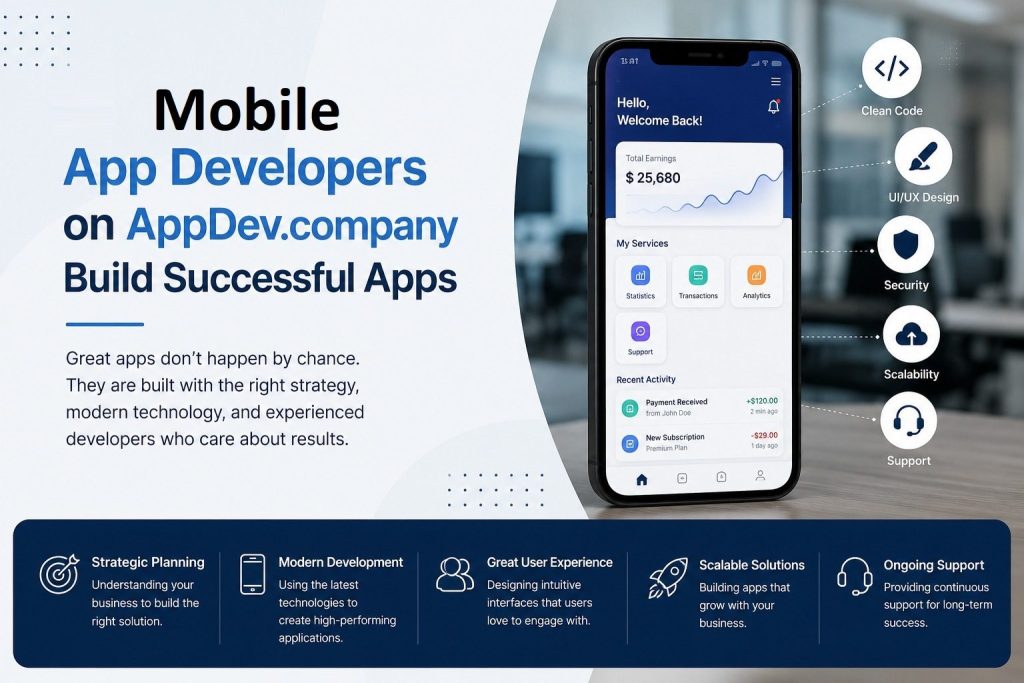
Most failed mobile app projects don’t fail because of bad code — they fail because the underlying business problem was never clearly understood before development started. App Dev Company, alongside its associated team of mobile app developers, structures its earliest project phase specifically around avoiding that mistake.
According to the company, its discovery process focuses on understanding a business, its customers, and the specific problem an application is expected to solve, before any feature list or development roadmap gets drawn up. This sequencing — business understanding first, technical planning second — reflects a broader industry lesson that a well-built app solving the wrong problem still fails commercially, regardless of how polished its engineering turns out to be.
Why Feature Lists Are the Wrong Starting Point
Many businesses approach a new app project by listing desired features, an intuitive but often counterproductive starting point, since a feature list assembled without first understanding target users and their actual pain points tends to produce an app that looks complete on paper but doesn’t address what would actually make customers use it. Professional mobile app developers generally push back on this instinct, redirecting early conversations toward the business problem itself before any feature discussion begins.
What a Proper Discovery Phase Produces
A structured discovery phase typically results in defined project goals, an identified target user base, and a development roadmap sequencing work in a logical order, artifacts that give both the client and the development team a shared reference point before coding begins. Skipping this phase — moving straight from a rough idea to development — tends to create ambiguity that surfaces later as scope disputes, missed expectations, or a finished app that technically works but doesn’t serve its intended commercial purpose.
FAQ
Why does a development team need to understand a business before coding?
Understanding the underlying business problem helps ensure the resulting application actually solves something customers will pay for or engage with, rather than simply implementing a requested feature list.
How long does a typical discovery phase take?
Available information does not specify a standard timeline, since discovery scope generally depends on project complexity and how well-defined the business requirements already are.
Does skipping discovery guarantee a project will fail?
Not necessarily, but skipping structured discovery increases the risk of misaligned expectations and features that don’t map to actual user needs, a risk that applies to any development team, not solely one specific vendor.
An App Dev Company that treats discovery as a genuine planning phase, rather than a formality before development begins, is generally better positioned to catch misaligned assumptions early, when they’re inexpensive to correct, rather than after a significant portion of the application has already been built around a flawed premise.
Interviewing actual prospective users during discovery, rather than relying solely on internal stakeholder assumptions about what customers want, tends to surface gaps between what a business believes its customers need and what those customers would actually value, a distinction that’s considerably cheaper to identify before development begins than after a full feature set has already been built around an untested assumption.
Documenting discovery findings in a shared format both the client and development team can reference throughout the project also helps prevent scope drift later, since disagreements about what was originally intended are easier to resolve when there’s a written record of the agreed-upon goals and roadmap rather than relying on memory of early conversations.
Visit- https://appdev.company/
Visit- https://appdevelopers.mobile/
Discover more from Times Release
Subscribe to get the latest posts sent to your email.